Building a WhatsApp AI Chatbot Monitoring System for Sales
Building a WhatsApp AI Chatbot Monitoring System: Turning Hundreds of Chats into Measurable Leads
Imagine a business receiving hundreds of WhatsApp messages every day from prospective customers. To manage the influx, they deploy an AI chatbot—a virtual assistant capable of responding to inquiries automatically, 24/7. Practical? Absolutely. However, a critical issue usually surfaces only after the chatbot goes live:
No one actually knows what is happening inside those conversations.
Over the past few months, I built a system designed to solve exactly this problem: a dedicated monitoring dashboard for WhatsApp AI chatbots. In this article, I want to share the story behind its development—the problems it solves, how it works under the hood, and the valuable lessons learned along the way.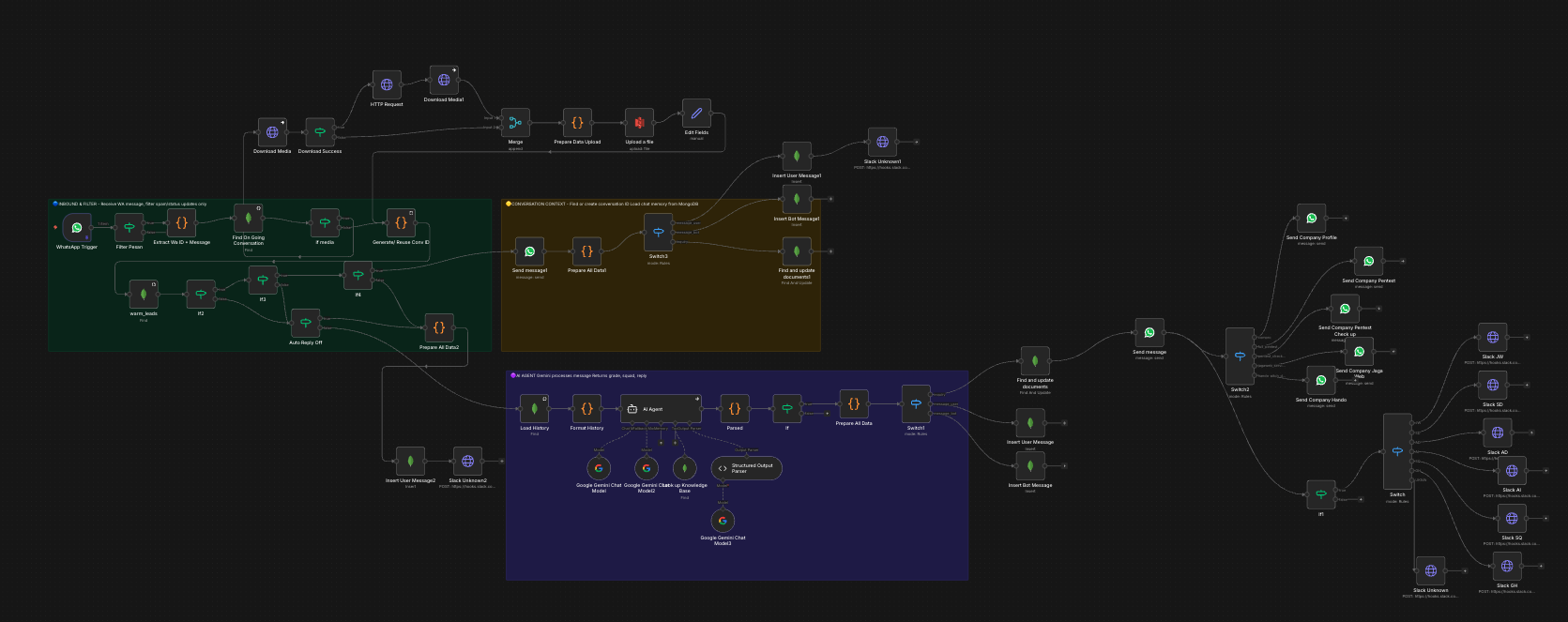
The Core Challenge: A Productive Chatbot without Supervision
An AI chatbot is like a receptionist who never sleeps. It greets every prospect, answers questions, and notes down their requirements. However, once the volume of daily conversations hits the hundreds, three fundamental questions arise that no one can easily answer:
Quality Validation: Are the chatbot's responses actually accurate? Or is it consistently hallucinating or giving wrong information without anyone noticing?
Lead Prioritization: Out of hundreds of people messaging, who is a hot lead (genuinely ready to buy)? The sales team simply doesn't have the time to manually curate every single chat log.
Human Intervention: When is the exact right moment for a human sales representative to step in and take over the conversation from the AI?
Without proper monitoring tools, the chatbot becomes a black box—operating continuously, but with unmeasurable output quality. As a result, the sales team risks losing high-value prospects simply because their messages get buried under an avalanche of casual inquiries.
The Solution: A Centralized Dashboard for Total Visibility
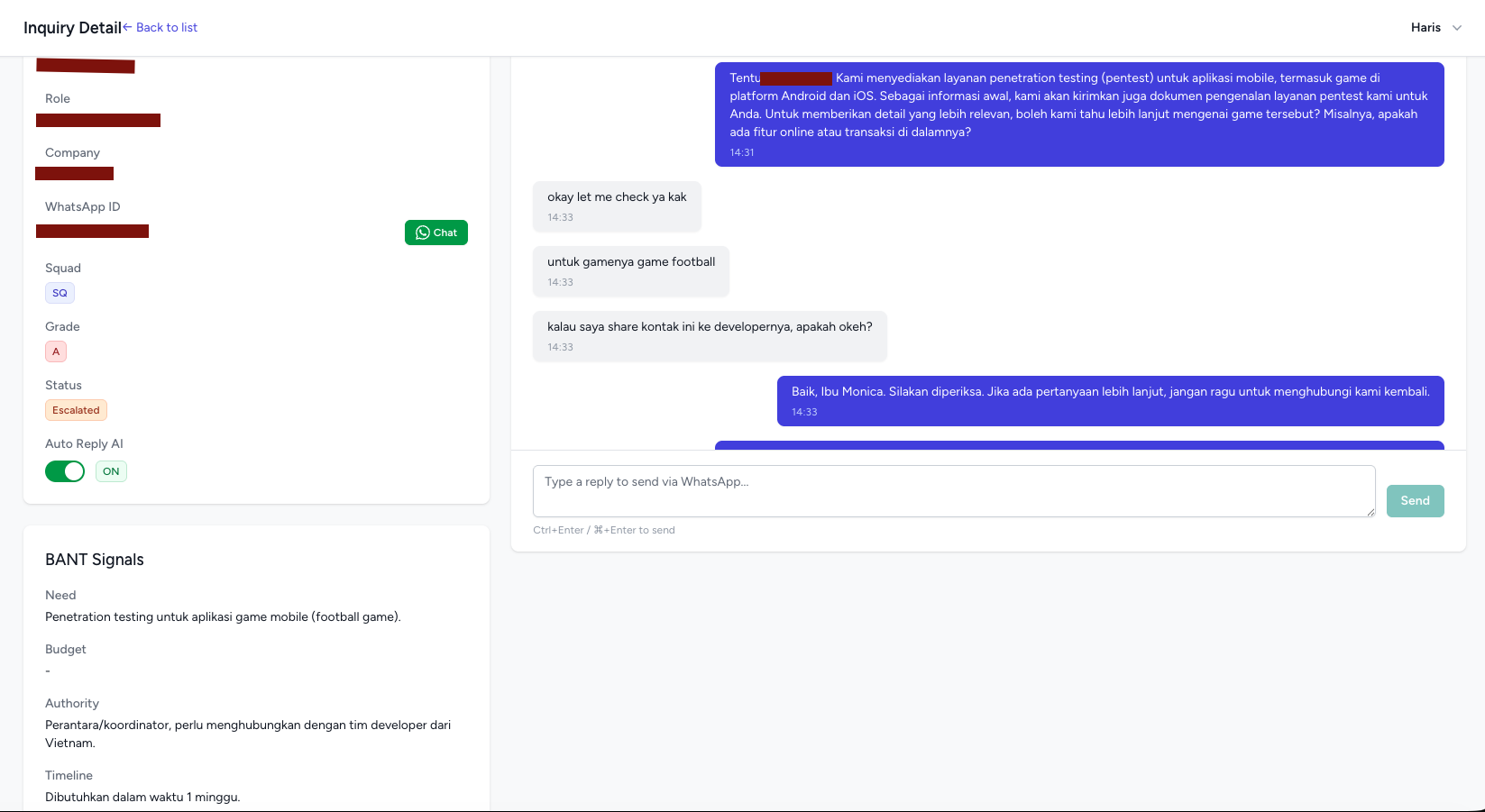
The system I engineered acts as a central command center. All chatbot interactions are funneled into a clean, intuitive dashboard. Through this platform, the sales team can execute four core actions:
Real-Time Monitoring: Read every interaction between the chatbot and customers seamlessly, including attached photos or documents.
Automated Qualification: View live quality scores for each prospect, updated instantly by the system.
Instant Intervention (Human Takeover): Take over conversations in real time upon detecting high-value sales opportunities or sensitive complaints.
Performance Analytics: Monitor inquiry trends and track performance distribution across different sales sub-teams through visual charts.
To ensure the team doesn't have to stare at the dashboard all day, the system features automated notifications sent to internal team chat apps when a hot lead is detected, alongside a daily digest report delivered via email every morning.
Feature Highlight: Automating Lead Qualification via the BANT Framework
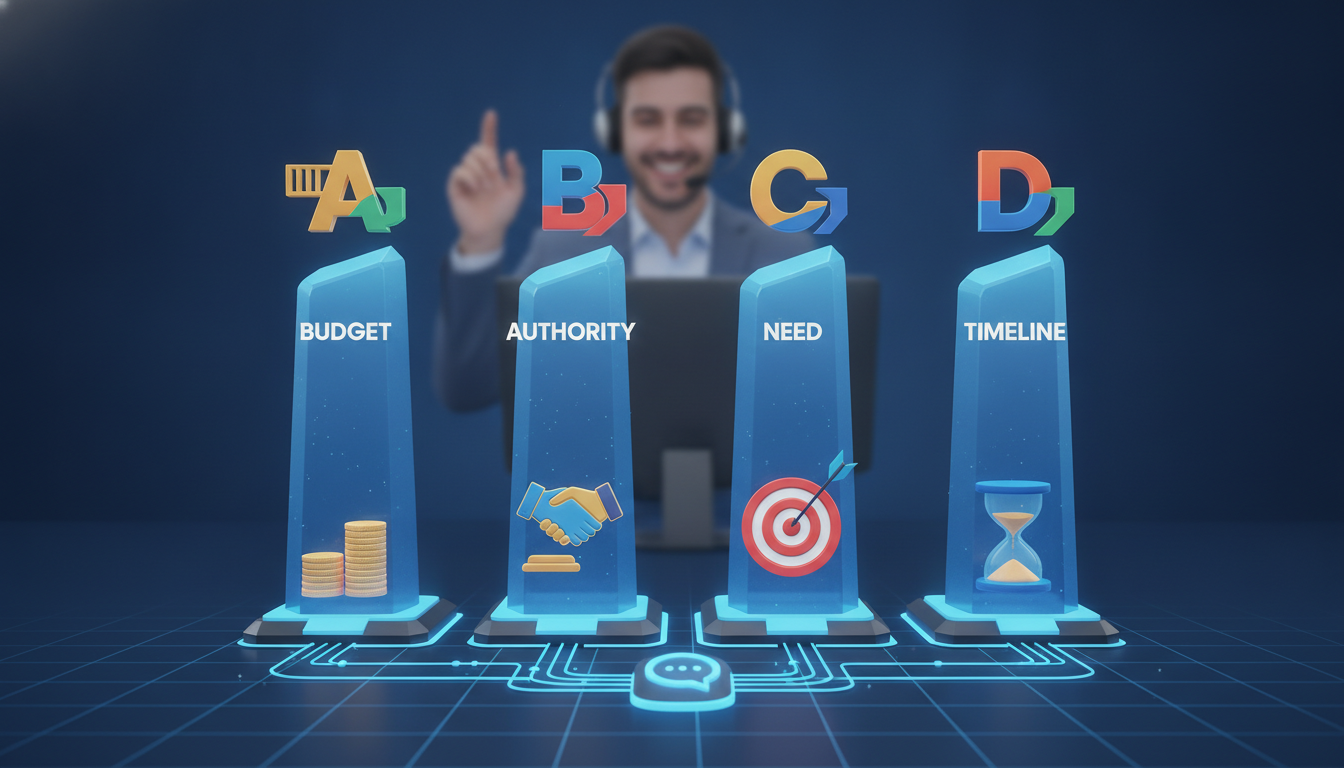
The feature that delivered the highest business impact in this project was Automated Lead Scoring. To assess a buyer's intent directly from chat history, I integrated a classic, time-tested sales qualification framework known as BANT:
BANT Component | System Analysis Description |
Budget | Does the prospect mention or imply having the budget that aligns with the product/service? |
Authority | Is the person reaching out the actual decision-maker or influencer in the purchasing process? |
Need | How specific, clear, and urgent is the problem or requirement they are expressing? |
Timeline | What is their target timeframe for making a purchase or finalizing the deal? |
Leveraging Natural Language Processing (NLP) via AI, the system analyzes the conversation context against these indicators and assigns a grade to each prospect's profile.
The result? The sales team no longer operates on guesswork or "gut feeling." They simply open the dashboard, sort the data by the highest grade, and prioritize their energy on converting the most promising prospects first.
Overcoming Behind-the-Scenes Challenges
The development process wasn't entirely smooth sailing—but it was through these technical hurdles that the best insights emerged:
1. Synchronizing Data from Third-Party Systems
The chatbot logs were processed by a separate automation platform with non-standardized data formats. A major hurdle: incoming data lacked explicit timestamps, making weekly or monthly performance filtering impossible.
The Fix: After digging deeper into the database architecture, I discovered hidden metadata tracking document creation times. The lesson here: the optimal solution is rarely to rewrite the whole system from scratch, but rather to fully understand the capabilities of your existing infrastructure.
2. Data Privacy and Access Control
The company manages multiple competitive regional sales teams, meaning team leads should only see data belonging to their respective teams.
The Fix: I designed a Multi-Tenant security architecture implemented directly at the database query level (a single-gate access enforcement), rather than just hiding UI elements on the frontend. This effectively prevented any cross-team data leaks.
3. Implementing a Bulletproof Audit Trail
With multiple administrators utilizing the system, every critical action needed to be accountable. I introduced comprehensive activity logging to track who changed what, when, and how. This single feature was crucial in establishing user trust in the new system.
The Tech Stack
For those interested in the technical blueprint, the system was built using a highly efficient and maintainable ecosystem:
Laravel (PHP): Serving as the core backend framework for its robustness in handling complex business logic and mature security features.
MongoDB: A NoSQL database chosen for its flexibility in storing dynamic, unstructured chat conversation streams.
n8n: A workflow automation tool that seamlessly bridges data communication between the WhatsApp API and the AI engine.
WhatsApp Business API Setup: API configuration and management is done through Meta Developer and Meta Business for authorized integration and messaging.
The user interface (UI/UX) was intentionally kept lightweight and responsive. For internal operations tools, speed and ease of maintenance (maintainability) are far more valuable than over-engineered tech stacks.
Key Takeaways
Technology is an Enabler, Business Decisions are the Goal: This dashboard is valuable not because of how clever the code is, but because it empowers the sales team to make rapid, data-driven decisions.
Clear Separation of Concerns (Decoupling): The chatbot focuses on initial engagement and retrieval, while the dashboard focuses on oversight and human decision-making. This decoupling allows both systems to evolve independently without breaking each other.
Administrative Features Often Save the Day: Features like no-code configuration settings and detailed activity logs are ultimately what make a system sustainable and widely adopted by daily operations teams.
This project stands out as one of my favorite portfolios—a perfect intersection of artificial intelligence, data processing, and tangible business solutions.
If your business is currently leveraging an AI chatbot and starting to feel overwhelmed by managing its conversion quality, or if you simply want to bounce around architectural ideas for a similar system, let's connect and discuss!